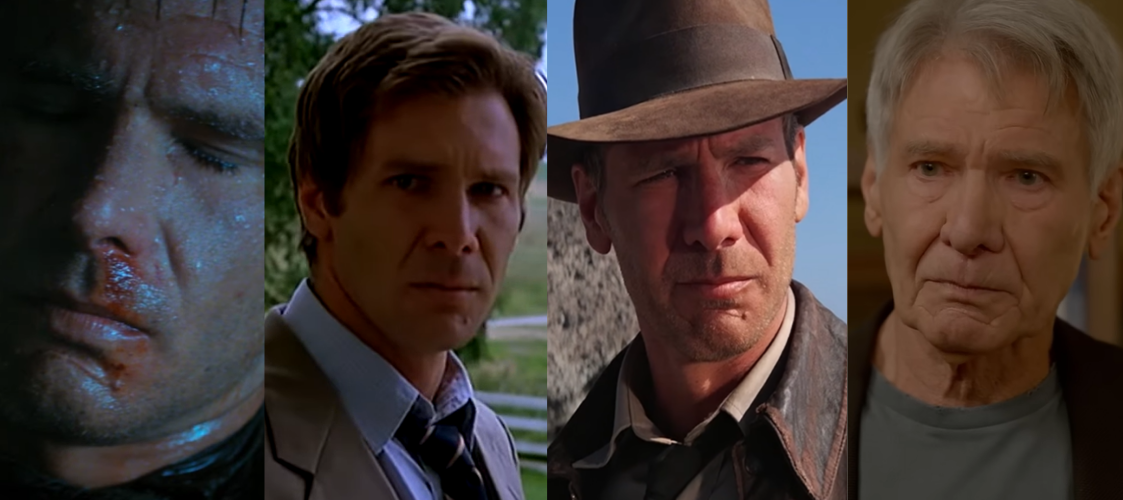
Anyone who knows me knows I am not the biggest fan of the film and television industry. I wouldn’t bat an eye, for instance, if we prohibited new movies entirely, or at the very least, if Lil Timmy Tim was banned from any further starring roles. Now, if someone held a gun to my head and ordered me to say something good about the business? Well, then I would probably start squealing about Harrison Ford as the psychiatrist Dr. Paul Rhodes in Shrinking. It would sound a bit like a little pig eagerly waiting for a bucket of slop.
Now, I should be clear that the show itself sucks. From Bill Lawrence’s grating dialogue to the classless world its characters inhabit, nearly everything about Shrinking is a chore to watch. It also just feels so profoundly out of touch for where we find ourselves in 2026. The one exception is Ford as Rhodes. As an elderly quack struggling with his imminent mortality, the veteran actor creates a riveting performance highlighting the importance of letting go.
For some, this might sound like uncharted territory. Ford lives in many people’s minds as someone whose characters always take (and keep) control of a situation until they get what they want. It’s what has made him one of the defining on-screen heroes and avatars for escapism in 20th century cinema. Yet over the decades, he has also repeatedly embodied men who realize acceptance is the only path forward. It’s a valuable quality of his work that gives it a largely unacknowledged weight.
The first time this theme emerged in a Ford film was in 1982’s science fiction classic Blade Runner. Ford played Rick Deckard in this Ridley Scott masterpiece, the titular “blade runner” in the story. Deckard is a burned-out cop living in the far future (which then was 2019, lol). The character is very clearly modeled on the hardboiled detectives of film noir. He’s world-weary, cynical and hard-drinking.
Like many noir antiheros, Deckard is this way because he’s trapped in a toxic society and a cycle of violence. Deckard, it turns out, is no ordinary cop. He’s a “blade runner,” a specialized unit that hunts down synthetic humans called “replicants” who choose to go rogue. In Blade Runner‘s world, replicants have few to no rights. Those that step outside society’s laws are deemed dangerous and must be “retired” by blade runners, a euphemism for extrajudicial, state-sponsored execution.
Deckard clearly carries a distaste for such a brutal profession, having briefly tried to leave it before the events of the film. This proves easier said than done. Blade Runner‘s world is one even more unequal than ours, and cops are afforded some level of status and power that is clearly hard to come by. Deckard’s boss, Bryant, says as much to the blade runner with this great line: “You know the score, pal. If you’re not cop, you’re little people.” His statement is enough to convince Deckard to overcome his reservations and return to blade running. He accepts a job from Bryant to track down four replicants who have escaped from the off-world colony shortly after.
As he embarks on this journey, Deckard quickly reveals a thinly veiled contempt for replicants. This is likely a coping mechanism related to his job, a way to rationalize killing beings that are identical to humans aside from being grown, not born. Deckard expresses this attitude primarily through his interactions with Sean Young’s replicant Rachel. Not only does he refer to her as “it” when he first meets her, but he also scoffs at her distress when she learns her memories aren’t real but implants.
Deckard’s dehumanizing outlook evolves as the story continues. He gradually softens and grows even affectionate toward Rachel after witnessing the depths of her inner life. The replicant Roy, played wonderfully by the late Rutger Hauer, challenges Deckard’s perspective further. In their final confrontation before Roy’s premature death (replicants are designed to have an abridged, four-year lifespan), the replicant chooses to save the blade runner who has been relentlessly trying to kill him. Afterwards, he tells Deckard about his short life before expiring, famously lamenting how “All those moments will be lost, in time, like tears, in the rain.”
Roy’s actions reveal his deep understanding of life’s sanctity and fleeting nature, while spotlighting Deckard’s deficiencies in the same areas. They mar the distinction between humans and replicants at the very least, so much so that Deckard’s beliefs about replicants completely collapse. We can see this play out on Ford’s face as Roy is giving his final speech to Deckard. The actor conveys a beautiful moment of sympathy and regret toward the replicant with merely his eyes. You can almost see Deckard’s worldview implode in real time. Because he can now no longer justify killing replicants, continuing as a blade runner also becomes completely untenable. At the end of the film, he overcomes the allure of the job’s power and status and leaves the city with Rachel.
Ford has another great moment of non-verbal acting during their departure that caps off this transformation. He recalls Gaff’s (Edward James Olmos) observation about Rachel but also about humanity in general. “It’s too bad she won’t live, but then again, who does?” Gaff says in voice-over. Ford gives the slightest head nod in acknowledgement. The beat articulates how Deckard now understands there is far more that unites humans and replicants than separates them, specifically a shared awareness of mortality.
Ford explored the theme next in Peter Weir’s classic, 1985 drama Witness. The actor plays Detective John Book in the film. A Philadelphia cop, Book is investigating a murder witnessed by an Amish boy named Samuel who is visiting the city with his widowed mother Rachel (Kelly McGillis). The murderers turn out to be Book’s fellow officers, who attack and wound Book once they realize he’s onto them. The detective must then flee to Amish country to prevent himself and Samuel from becoming their next victims. While hiding out, he forms a romantic connection with Rachel, bonds with Samuel and later wins the begrudging respect of Eli (Jan Rubes), Rachel’s former father-in-law.
Book is a decent man who genuinely believes in protecting others and serving justice. Yet he also has a deeply arrogant streak. Book seems to believe that his judgment and capabilities are infallible and that deferring to others is unnecessary. His sister (relayed secondhand by Rachel) speaks to this hubris directly before the detective is attacked and wounded. Book thinks he’s “right about everything” and “the only one who can do anything.” Not only that, but other cops are “idiots,” and Book believes he can comment on her parenting despite having no children of his own.
Once Book recovers from his wounds, he starts helping out around the Amish community and becomes exposed to a radically different perspective. The entire Amish community comes together to build a barn for a newlywed couple in a single afternoon. Book participates in this endeavor. While doing so, he sees how big things can be accomplished through collaboration.
Although this experience expands Book’s mind, it’s not enough to change his behavior. We see this play out in a later scene where Book accompanies the Amish to town and they are hassled by some thugs. As strident pacifists, the Amish don’t respond to the abuse, with Eli explaining, “It’s not our way.” Book sure does though. “Yeah, but it’s my way,” he says before making some of the bullies eat their own teeth. Book’s decision unfortunately backfires. The assault tips off the cops to the detective’s location and they wind up attacking the farm to silence him and Samuel in the film’s climax. Book fights back and stops some of the police. But it is the Amish working together as a community, not Book acting alone, that finally brings the violence to a close.
These experiences push Book to finally abandon his arrogance. His inner growth is externalized through his final goodbye to Rachel before he returns to the city. He notably doesn’t try to convince Rachel to leave with him despite having fallen in love with her. His inaction signifies that he has gained much-needed humility. Specifically, Book has realized that sometimes one must defer to something larger than themselves, and that even the most hypercompetent person in the world cannot always ensure a good outcome.
In this case, Book defers to the larger social realities in which he and Rachel exist. Despite having the best intentions, Book is fully aware that pushing a pacifistic, devout Amish woman into his violent, secular world would likely prove highly disruptive for all involved. Walking away is the only acceptable option if he truly does care for both Rachel and the Amish community as a whole. Ford’s brilliant, entirely non-verbal acting in this scene establishes how seismic a shift this is for the character. You can see Book’s deep longing for Rachel all over Ford’s face, as well as the pain involved in doing something you don’t want even though you know it’s right.
Ford closed out the decade again channeling this theme. In 1989’s Indiana Jones and the Last Crusade, Ford returns as the famous titular adventurer. But his Jones is a far deeper character than in previous films. Lucas and Spielberg introduce Indy’s father, Henry Jones Senior, played perfectly by the late Sean Connery. The father and son duo also have a strained relationship due to Indy not feeling any connection to his father.
Indy comments on this after they flee a Nazi garrison in an early scene. He remarks that he “never understood” his dad’s all-consuming obsession with the Grail. The two men later board a dirigible, and the topic comes up again. While discussing Indy’s childhood, the adventurer sadly laments how they never talked and this was a “lonely way to grow up.”
Indy’s perceived lack of connection to his father has kept him trapped in a cycle of anger and resentment. One way Spielberg depicts this is through Indy’s prickly reactions to being called “Junior” or, as Connery might pronounce it, “Joon-Yah.” It is pretty easy to sympathize with Indy’s point of view. When one doesn’t feel any type of connection to their parent, being characterized as little more than offshoot without an established identity of your own isn’t particularly palatable.
Of course, eventually the relationship softens. When Indy and Henry are facing certain death from a pursuing Nazi warplane in a later scene, the older man has a moment of brilliance that changes everything. Using his parasol, Henry drives a flock of seagulls into the incoming plane, causing it to crash.
Spielberg zooms in on Ford’s face in the aftermath, which is awash in complex emotion and expertly depicts how Indy now sees his father in a new light. In a matter of seconds, the actor conveys shock to reflection to finally warmth, understanding and appreciation. It’s a reaction that makes sense given where Indy is at this point in his journey.
Before that moment, Henry had been merely a representation of everything Indy didn’t get as a child, a figure with which he shared blood but nothing else. Yet now he sees that they have the same resourcefulness. Based on the beach scene, it’s plausible that Henry is the source of Indy’s own improvisational superpowers. This breaks the logjam between father and son. Indy is able to let go of his resentment. Indy even treats being called “Junior” in the final scene with less ire, reacting to it instead with begrudging acceptance.
In the nineties, aughts and tens, Ford continued to periodically revisit this theme. 1991’s Regarding Henry saw Ford’s titular character forced to give up his old life of wealth and status after suffering a near-fatal shooting and significant brain damage. In 1999’s Random Hearts, Ford’s cop character, Dutch, was forced to accept not only his wife’s untimely death via a plane crash but that she was being unfaithful long before. Later in 2010, Ford appeared in Morning Glory as Mike Pomeroy, a legendary yet rigid journalist. The actor gave a strong performance playing a man pushed to confront and jettison runaway ego for the sake of others like Rachel McAdams’ Becky.
His greatest take on the subject from the 2010s, not to mention his greatest performance from that era, was 2015’s The Age of Adaline. In that fantastical romance/drama, William Jones (Anthony Ingruber) falls in love with Blake Lively’s Adaline, a woman who doesn’t age due to a freak accident. Before he can notice her condition, Adaline leaves him with no warning or explanation. Many years later, Adaline is dating a beefcake named Ellis and realizes that Ellis’s father, William (embodied by Ford), and her William are one and the same.
Despite having physically aged, William is clearly traumatized from Adaline’s unexplained disappearance and remains stuck in the time he originally knew her. This has created an undercurrent of tension with the woman he went on to marry after Adaline. His wife, Kathy (Kathy Baker), can’t help but rightfully feel like his “second choice.”
William eventually discerns Adaline’s identity. The pair share a tense conversation in the woods, where William pushes Adaline to admit to who she is. When she finally does, Ford’s face registers William’s shock and sadness but also an undercurrent of relief simultaneously. It’s an expertly executed moment. The actor shows us how William has become unburdened through facing the past. His story then ends by recommitting to Kathy in a sweet wedding anniversary speech, where he calls her, unequivocally, the love of his life.
That brings us finally back to Shrinking and Ford’s absolutely stellar performance as Dr. Paul Rhodes. We learn early in the show that Paul is someone who has spent a lifetime prioritizing certain values such as work, emotional control and strict boundaries. Paul’s stance is reflected in his choice of profession. As a shrink, he gets to have intense emotional connections, but without all of the baggage and messiness that non-therapeutic relationships entail. For each exchange, there are rules, strict time limits and no obligation to be vulnerable in return. “Look, I’m pro boundaries,” he says early on, explaining this worldview. “I’m always there for my patients, just not my very needy colleagues.”
Shrinking gradually reveals how this philosophy of prioritizing work over real emotional intimacy has often had a profoundly negative effect on Paul’s life. His first marriage went down in flames because of the shrink’s obsession with work, emotional unavailability and resulting infidelity. Paul’s betrayal also damaged his relationship with his daughter, leading to them rarely speaking over the course of many years.
In the fallout, Paul retreated further into himself and his identity as a clinician first—friend, father, mentor second or perhaps third or fourth. That’s pretty much where we find him at the beginning of Shrinking. While he can be kind and supportive with colleagues Jimmy and Gabbie (Jason Segel and Jessica Williams, respectively), he undeniably keeps them at arm’s length. The one exception to this rule is Jimmy’s teenage daughter, Alice (Lukita Maxwell). But even the time they spend together still functions mostly as an informal therapy session, with Paul counseling Alice on the impact of her mother’s premature death on a local park bench.
Scrambling Paul’s calculus is that he has recently been diagnosed with Parkinson’s. As the seasons go by, the disease progresses rapidly and begins disrupting his carefully ordered life. Paul initially rails against this disruption, refusing to make preparations for his decline by signing power of attorney paperwork or informing his family. Over time, he painfully realizes that his days as a therapist are numbered. He begins to let go of his boundaries and get involved with those around him, first begrudgingly then more gladly.
For Gabbie and Jimmy, this involves Paul intervening directly in their affairs rather than merely dispensing wisdom from the sideline. He also makes amends to his wife and daughter, facing up to shame and guilt that he had carried for years regarding how he treated them. Later on, he even dates and weds Julie (the prolific Wendie Mack), his former Parkinsons doc. (Perhaps some boundaries should be maintained!)
More dramatic is how Paul reluctantly begins to let people show up for him in his time of need. Early in season one, Gabbie provides Paul with a water bottle after reading that people with Parkinsons struggle with their hydration. Although he’s blustery about it at first, eventually he begins using it. The very next episode, he agrees to her driving him to work after accidentally rear-ending her car. He later shares his diagnosis with his daughter and allows her to come out to California to help him. He also takes advice from Jimmy about how he should deal with family when he previously would have rebuffed him.
Paul drops his boundaries further in season two. He confides in Jimmy that the younger therapist will need to intervene when it’s time for Paul to end his career. He also expresses a wariness of going to appointments alone and accepts being accompanied by Sean (Luke Tennie), a joint patient of his and Jimmy’s (another instance where you understand what the show is doing thematically but can’t condone it morally). Paul even skips taking his medication one day because he has no interest in “hiding” how much of a tremor he has.
Paul’s arc reaches its first apogee in the season two finale, which sees the gang gather for Thanksgiving. The wizened shrink gives a searing, heart-wrenching speech at one point in the festivities about what he’s thankful for. And it features some of the best work Ford has ever done. Fighting back tears, Paul shakily and movingly verbalizes what was previously anathema to him: He is “leaning on” all the other people present at the Thanksgiving celebration.
The speech makes it clear how deeply this change has affected Paul. He was once full of self-pity over his “failed, fragile body” and ever-increasing dependence. Now he considers himself a “lucky guy” because of the supportive, caring community he’s gained by dropping his boundaries. “The road is going to get tougher and tougher and tougher. But I know I’ll get through it because of everyone in this room,” he says, giving voice to this transformation and why it matters. “Because we can get through anything if we have people to lean on.”
Paul’s journey from self-pity to gratitude perfectly embodies that letting go is important and beautiful. It is a powerful mechanism for dealing with seemingly immutable problems and triggering profound personal growth. The same can be said for Deckard, who abandons an endless cycle of violence and death to pursue love and life with Rachel. Book’s path goes in a similar direction, where he transitions from destructive hubris to selfless humility. Even the archetypal Indiana Jones follows this trajectory. By the end of Last Crusade, the adventurer lays down his simmering resentment and allows his father to be at least partially redeemed.
This makes Ford’s exploration of letting go one of the most vital aspects of his career, but also perhaps one of the most unacknowledged. Ford will always be known as a master of frantic, kinetic action, where his heroes take on impossible odds and often win. But when the odds are stacked against you in real life, often times there isn’t a clear-cut solution. In these moments, sometimes the only thing you can do is endure rather than fix. Ford has also provided us with incisive portraits of how letting go can help us face these moments with grit, and in doing so, find grace and growth. That gives his filmography a relevance and immediacy to our lives that his image in the popular imagination doesn’t fully capture.
On some level, that’s completely understandable. Harrison Ford is now 84 years old. He has been enshrined as a larger-than-life hero for almost 50 years since appearing in A New Hope and roguishly saying things like “Boring conversation anyway,” before blowing away the Death Star’s intercom system. These images are indelible and hard to shake off, which is why, I’d wager, his performance in Shrinking may feel like a revelation to some. But as we’ve seen, it’s far more of a continuation or perhaps culmination of a career-long trend. In and around his big blockbusters, where relentless adrenaline, verve and indomitable will lead to triumph, Ford has repeatedly examined the polar opposite. He has also personified on screen how life often brings us to places where letting go is the only way out of darkness and surrender offers its own victory. These quieter, more introspective moments likely won’t show up in his future in-memoriam highlights reel. But to me, they still represent a wonderful way to spend one’s artistic life.

